Fauna Report / Article
Rewilding, and the arguments it raises
Letting nature take back control sounds simple. In practice rewilding is a set of contested choices about which nature, and whose land.
- conservation
- rewilding
- debate
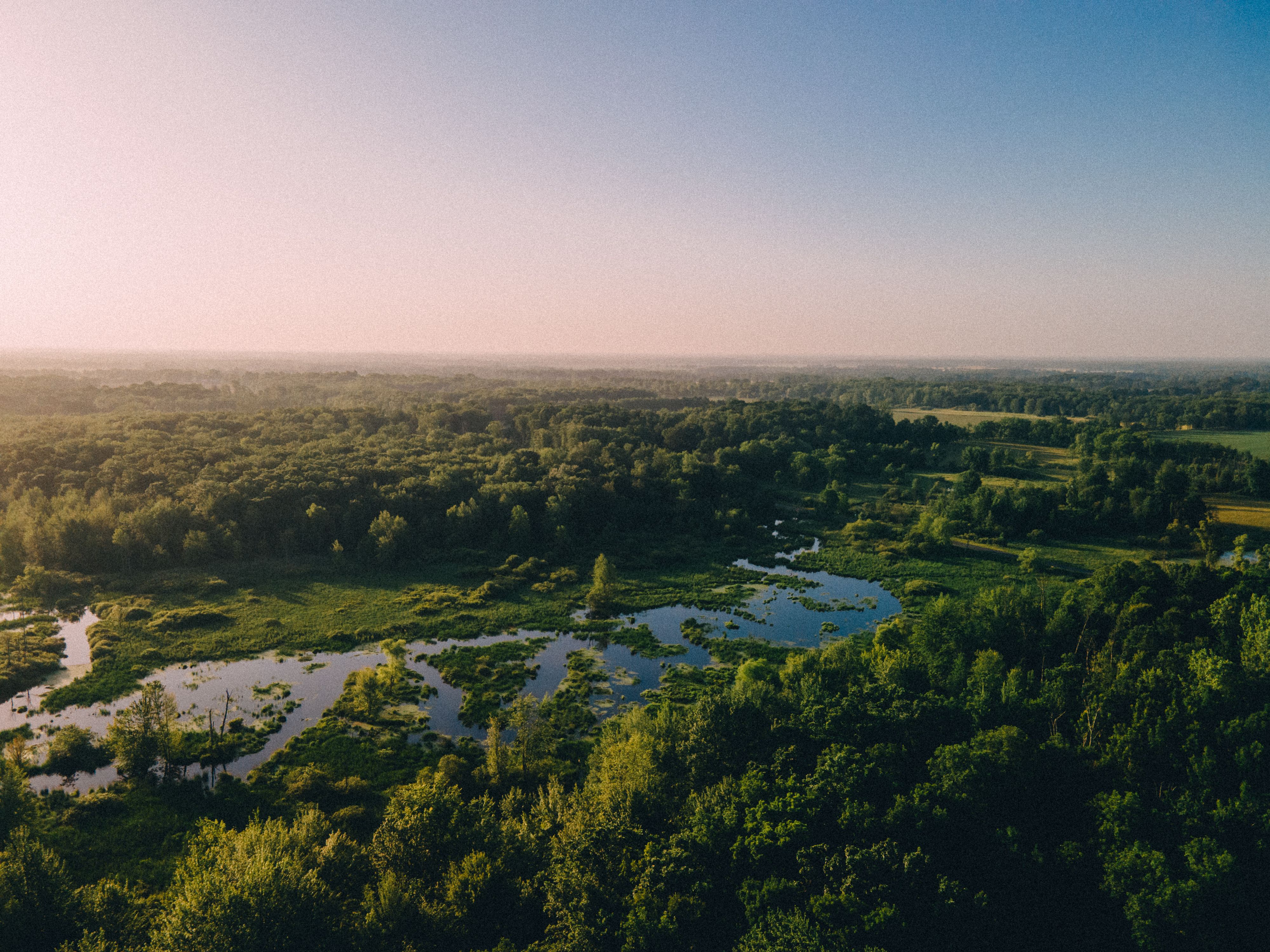
Rewilding is one of the most hopeful ideas in modern conservation, and one of the most argued-over. The basic pitch is appealing: instead of managing every hectare intensively, step back, restore natural processes, and let ecosystems repair themselves. But underneath that simple picture sit several hard choices, and most of the disagreement is about them.
What rewilding actually proposes
Traditional conservation often means active, permanent management — controlling numbers, mowing meadows, holding a landscape in a particular state. Rewilding proposes the opposite: reduce intervention and let natural forces, especially large animals, do the work.
The centrepiece is usually trophic rewilding — returning large herbivores and predators to restart the chains of interaction they drive. Wolves change where deer graze, which changes where trees grow, which changes rivers. Large grazers create the patchy, varied landscapes that many smaller species depend on. The animals aren't the goal; they're the engine.
The wolf argument, and why it's more complicated than the story
The most famous case is the return of wolves to a large national park, often told as a tidy fable: wolves came back, deer moved, trees recovered, even rivers shifted. It's a genuine and striking example of a predator reshaping a landscape.
It's also become more contested than the popular version admits. Ecologists debate how much of the change the wolves really caused versus other factors, and how well the story generalises. That debate is worth knowing about, because it illustrates the central difficulty of rewilding: ecosystems are complicated, effects are hard to attribute cleanly, and a compelling narrative can outrun the evidence. Rewilding works, but rarely as neatly as the telling suggests.
The genuinely hard questions
The arguments around rewilding aren't really about whether natural processes are good. They're about choices the word "wild" tends to hide:
- Which baseline? Restore to a hundred years ago, a thousand, before humans arrived? There's no single "natural" state to return to, only a choice among past states — and that choice is a value judgement dressed as a scientific one.
- What about missing species? When the original large animals are extinct, some propose substitutes — a living species standing in for a vanished relative's ecological role. Bold, and genuinely uncertain in its consequences.
- Whose land? Rewilding often needs large, connected areas, which means people already using that land. Framed carelessly, it can look like conservation deciding that farmland or working landscapes should be emptied — with the social conflict that invites.
Why it still matters
For all the arguments, rewilding addresses a real limitation of the intensive model: you cannot manage every threatened hectare by hand forever, and ecosystems held artificially in one state are fragile and expensive. Restoring processes rather than micromanaging outcomes is, in many places, the only affordable long-term option.
The honest way to read a rewilding project is not as a return to some pure past — that past is a choice, not a fact — but as a deliberate bet: that stepping back and restoring a few key processes will produce a richer, more self-sustaining system than continued hands-on control. Sometimes it's the right bet. Whether it is depends on the particular land, the particular species, and the particular people who live there — which is exactly why the general enthusiasm and the local arguments so often pull in opposite directions.
Sources and further reading
- Svenning, J.-C. et al. (2016). Science for a wilder Anthropocene: synthesis and future directions for trophic rewilding research. PNAS 113(4): 898–906 — defines trophic rewilding and reviews the evidence.
- The Big Scientific Debate: Trophic Cascades (US National Park Service) — Yellowstone scientists on why the popular wolves-changed-the-rivers story is contested.